


 Trading Company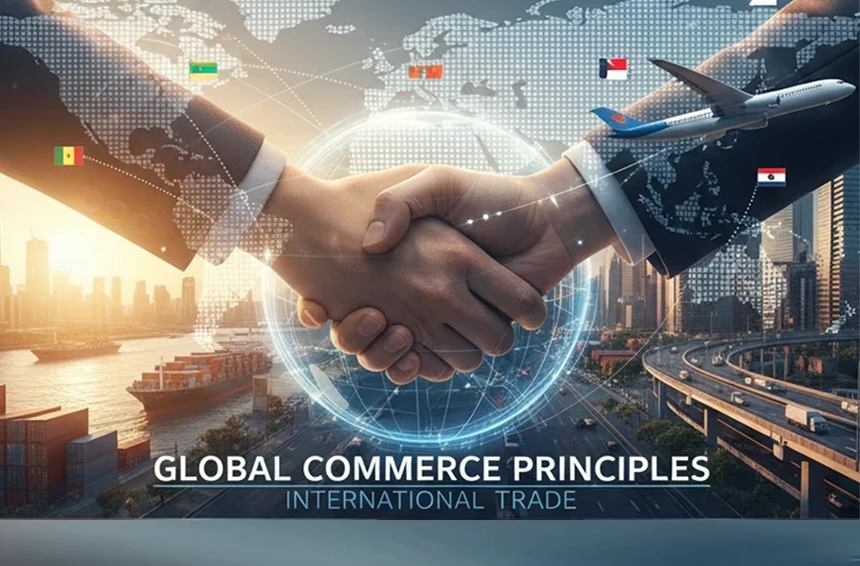
Commerce, as one of the fundamental pillars of the global economy, plays a crucial role in economic development and the exchange of goods and services. Extending far beyond the mere exchange of commodities, this field requires a profound understanding of economic principles and concepts, international laws, and market trends.
In this article, we will explore the principles and foundations of commerce. From the history of trade to its various forms—such as domestic, international, and e-commerce—all aspects of this field will be examined. Additionally, common terms and concepts in commerce will be comprehensively explained. By reading this article, readers can gain a clear perspective on the importance and role of commerce in the global economy, preparing themselves to operate successfully in the commercial sector.
The History of Commerce
Commerce, defined as the activity of exchanging goods and services among individuals, companies, and nations, dates back thousands of years to ancient times. Even from those ancient eras, the profound impact of trade on global cultures, economies, and societies remains visible today. Furthermore, driven by technological advancements and the expansion of international trade, commerce has evolved into one of the world’s most critical economic components. Today, familiarity with the principles and foundations of commerce is considered a significant competitive advantage for both individuals and businesses.

Types of Commerce and Commercial Principles
Domestic Commerce
Domestic commerce refers to the exchange of goods and services among individuals, companies, and organizations within a specific country. In this type of trade, all commercial activities—including production, distribution, buying, and selling of goods—take place domestically. In other words, economic transactions occurring within the borders of a single nation are recognized as domestic commerce.
Within the principles and foundations of domestic commerce, restrictions and regulations related to the import and export of goods are of lesser concern; instead, the primary focus is on the internal exchange of products and services. This form of trade has a profound impact on a nation’s domestic economy and is widely regarded as a fundamental pillar for economic development.
International Commerce
It encompasses the exchange of goods and services between countries. This type of commerce includes exports, imports, foreign trade, and foreign investment. International commerce refers to the trade and exchange of goods and services among nations and international entities. In this form of commerce, commercial activities extend beyond national borders, involving the exchange of goods, services, capital, technology, knowledge, and human resources.
In international trade, companies and individuals conduct business on a global scale, collaborating with foreign enterprises and clients to expand business opportunities and maximize profits. This type of commerce encompasses the import and export of goods, foreign investment, participation in international tenders, technology transfer, and involvement in global supply chains.
Electronic Commerce (E-Commerce)
Electronic commerce refers to a form of trade where the exchange of goods and services takes place through internet networks and other digital technologies. This type of commerce has become highly prevalent in recent decades, bringing about significant transformations in global trade patterns.
In this commercial model, sellers and customers connect via websites, applications, and online platforms to buy and sell products and services. Its advantages include easy access to global markets, cost reduction, and streamlined order processing.
Common Commercial Terms
- Export
Exporting refers to the process of selling goods, services, or capital to foreign countries and plays a vital role in a nation’s economic growth.
- Import
Importing involves purchasing goods and services from foreign countries, directly contributing to meeting domestic demands and enhancing product variety.
- Transit
The transportation of goods across one or more borders without halting or changing ownership is known as transit, a process that significantly facilitates international trade.
- Multilateral Trade
This refers to the exchange of goods and services among multiple countries based on international agreements, aimed at fostering greater economic cooperation.
- Bilateral Trade
This type of trade is conducted exclusively between two nations and is established upon mutually agreed bilateral treaties.
Conclusion
A solid understanding of the principles and foundations of commerce is essential for anyone operating within the trading sector. Driven by the rapid growth of technology and communications, commerce has solidified its position as one of the primary pillars of the global economy.
To gain deeper insights into the principles and foundations of commerce across various countries, Yaghoot Taban Asia Trading Company is at your service. We provide specialized information and expert services across diverse commercial fields and business fundamentals.